
Event planning for office professionals: What to do when an event lands on your desk
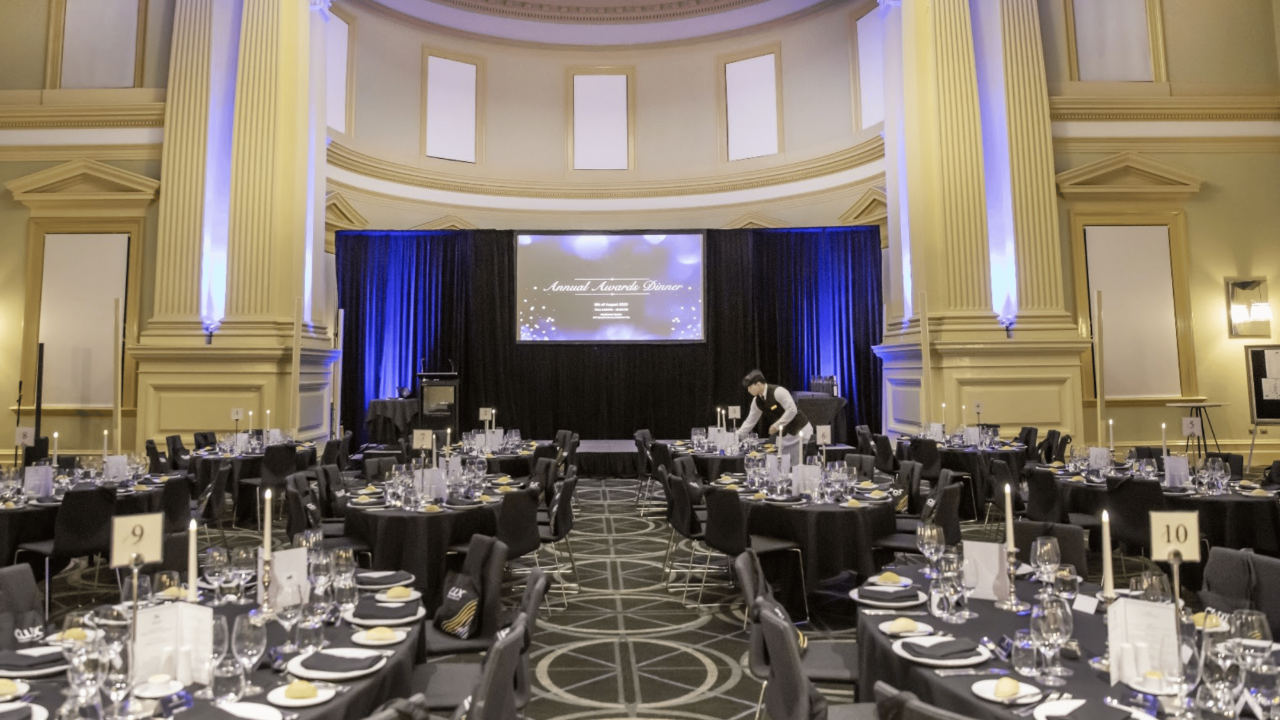
Asked to organise an event as part of your role? Before you start contacting venues or suppliers, there are several important questions you need answered.
By Sally Porteous, event strategist, producer and trainer with more than 20 years’ experience planning corporate, government and community events.
“Hey, can you organise this for me?”
How many times have you heard that line? Being asked to organise an event is common for EAs, PAs, administration professionals, receptionists and office managers, even when event management is not mentioned anywhere in the position description. It might be a staff retreat, conference, board meeting, Christmas party, customer event, official opening or awards dinner. Whatever the event, the expectation is often the same: say yes, work it out and make sure everything runs smoothly.
Here's my top tip, even when you know exactly what you're doing.
Before you start searching for venues, requesting catering quotes or deciding what the invitation should look like, you need to understand what you have actually been asked to achieve. The event’s purpose, audience, desired outcome, budget, responsibilities, decision-making process and risks should all be clarified before detailed planning begins. Without that foundation, even the most organised person can find herself making decisions based on assumptions rather than facts.
How event planning became part of my administration roles
In my first proper job, I regularly hosted real estate buyers who flew from Sydney to a place in Queensland called Nanango. I would leave Brisbane early in the morning for the three-hour drive, taking a marquee, signage, information packs, morning tea and everything required to make hot coffee. My job was to arrive before the guests and have the site completely set up by the time they were brought in by minibus.
The guests would be shown blocks of land, given a sales presentation, served refreshments and then transported back to the airport for their flight home. Once they left, I packed everything away, loaded it into my own car and drove back to Brisbane, often arriving home at about 7 pm. I also paid for the fuel myself. This was not an event management role. I was the company receptionist, and organising these sales trips was simply another responsibility that had landed on my desk.
A few years ago, I reflected on the different jobs I have held and realised that almost every one of them involved organising events. I have coordinated annual conferences for franchise owners, sales conferences, staff wellbeing retreats, strategic planning off-sites, board meetings, community events and Christmas parties. I've worked on major technology expos, awards galas, customer loyalty events, giveaways, official openings and sponsorship activations.
Many of these events were organised as part of my regular work as an EA, PA, receptionist or administration officer. None of the position descriptions included “event management” as a core responsibility. Some referred briefly to events, meetings or board papers, but in many cases the word “event” did not appear at all. I had no formal training in event planning, even though I had attended secretarial school, as it was known at the time, and had worked in office environments for many years.
I was nearly 30 before I realised event management was an industry in its own right, despite having already spent around 15 years organising events in some form. It was another 15 years before I discovered it was something I could formally study. Perhaps I was slow to recognise it, or perhaps I was simply used to saying yes to whatever needed to be done. I knew that I enjoyed organising events, but I did not enjoy the pressure that came with having to work everything out on my own.
Why events often land with office professionals
Events are frequently allocated to office professionals because they are already considered organised, capable and reliable. They understand how the organisation works, know the people involved and are usually skilled at managing competing priorities. They can communicate with senior leaders, employees, suppliers and customers, often while keeping track of budgets, deadlines and details that other people have overlooked.
These are all valuable event-planning skills, but being capable and organised does not mean someone has been given the information, time, authority or training required to plan an event properly. Too often, an event is treated as an additional administrative task rather than a project with its own objectives, budget, risks and operational requirements. The person responsible is expected to rely on common sense, instinct and whatever information can be found from previous events.
That was certainly how I worked in my early years. When my boss asked me to organise those monthly sales trips, I did not ask many questions or request a formal brief. There was no documented process, previous event plan or risk assessment for me to follow. I simply figured it out as I went, based on what seemed logical at the time.
The problem with relying entirely on instinct is that you do not know when your instincts are wrong. You may make sensible decisions based on the information available to you, while still missing something that could create a financial, safety, reputational or operational problem. Capability is important, but it is not a substitute for a clear planning process. You simply don't know, what you don't know.
What should you clarify before organising an event?
When an event first lands on your desk, resist the temptation to immediately start researching venues, caterers, speakers or entertainment. Your first job is to understand why the event is being held and what it needs to achieve. Is the purpose to educate, celebrate, raise money, generate sales, build relationships, recognise employees or communicate important information? A clear purpose will guide almost every decision that follows.
You also need to understand the audience. Who is expected to attend, why would they participate and what do they need from the experience? An internal staff event will require a different approach from a customer event, an industry conference or a community celebration. Knowing who the event is for will affect the venue, format, timing, communication, catering, accessibility and program.
The desired outcome should be discussed separately from the purpose. The purpose might be to bring customers together, while the intended outcome could be increased loyalty, new sales conversations or stronger relationships. A staff retreat may be designed to support strategic planning, but the expected outcome could be a set of agreed priorities and actions. If the outcome is vague, it becomes difficult to judge whether the event has been successful.
Budget is another area that needs to be clarified before commitments are made. You need to know how much has been approved, who can authorise expenditure, whether the budget includes GST and whether ticket sales, sponsorship or other revenue are expected. You should also establish whether the budget is based on a realistic assessment of current costs or simply copied from an event held several years ago.
Your responsibilities must also be clearly defined. Event planning can include strategy, budgeting, venue sourcing, supplier management, registrations, marketing, guest communication, program development, speaker management, risk planning and on-site delivery. It is not reasonable to assume that one person is responsible for all of these areas without discussing the workload, available support and decision-making authority.
You need to know who has final approval over the venue, budget, program, suppliers, marketing and any changes that arise. Events become unnecessarily difficult when several people believe they are the decision-maker, or when no one is prepared to make a decision at all. Establishing a clear approval process early can prevent delays, duplicated work and expensive last-minute changes.
Finally, consider what could affect the safety, reputation or success of the event. Depending on the event, this may include accessibility, food safety, weather, insurance, alcohol service, supplier contracts, emergency procedures, privacy, security and workplace health and safety. Risk management is not about expecting the worst. It is about identifying potential problems early enough to make practical decisions about them.
What can go wrong without a clear event plan?
Looking back on those early sales trips, I can now see how many questions I did not ask. What would have happened if the guests arrived before I was ready, the weather changed or the coffee equipment failed? What if someone had a serious food allergy, the morning tea had not been transported safely in the Queensland heat or the information provided to the buyers was incorrect?
At the time, I was focused on completing the task I had been given. I did not have the knowledge or experience to recognise all the possible risks. The event could have resulted in a poor customer experience, a lost sale, a public relations problem or a genuine health and safety issue. Fortunately, nothing serious happened, but relying on good fortune is not an event-planning strategy.
The old saying that “we don’t know what we don’t know” is especially relevant to events. When someone is handed an event without proper guidance, instructions or access to previous planning information, there will always be gaps in their knowledge. A reliable process helps reveal those gaps before they become problems.
Download the free pre-event checklist
To help office professionals and anyone else who has been asked to organise an event as part of their role, I have created a free pre-event checklist. It covers the key questions you should ask before detailed planning begins and can be used across a range of corporate, business and workplace events.
The checklist will help you clarify expectations, identify missing information and understand what needs to be decided before you start booking suppliers or spending money. It will not plan the entire event for you, but it will give you a much stronger and less stressful starting point.
Download the free pre-event checklist here.
Event planning is skilled work
Organising an event requires much more than booking a venue, ordering catering and sending an invitation. It takes creativity, practical judgement, attention to detail, communication skills, commercial awareness, a logistics brain, a calm temperament and the ability to solve problems quickly when circumstances change.
It also carries real responsibility. The person organising the event may be managing significant expenditure, representing the organisation publicly and making decisions that affect the safety and experience of everyone attending. These responsibilities should not be dismissed simply because event management is only one part of someone’s broader role.
If event planning has landed on your desk, recognise it for what it is: skilled work that deserves a proper process, realistic expectations and appropriate support. You may not have “event manager” in your job title, but you still deserve the tools and training to do the work properly.
Event planning training for teams
I provide in-person event management training for teams and individuals across event strategy, design, planning systems, marketing, sponsorship and the practical use of AI in events. I also deliver keynote presentations and workshops for conferences, professional associations and workplace development programs.
Enquire about event planning training for your team
Frequently asked questions
What is the first step when planning a workplace event?
The first step is to confirm the purpose of the event, who it is for and what it needs to achieve. You should also clarify the approved budget, your responsibilities and who has authority to make final decisions. These questions should be answered before you begin selecting venues or requesting supplier quotes.
What should be included in a pre-event checklist?
A pre-event checklist should cover the event’s purpose, audience, outcomes, budget, stakeholders, responsibilities, timing, venue requirements, suppliers, communication, accessibility, logistics and risk. It should help you determine whether you have enough information to begin detailed planning.
Is event planning normally part of an administration role?
Event planning is frequently allocated to EAs, PAs, office managers, receptionists and administration professionals, even when it is not clearly included in their position description. Events are often assigned to these roles because the people in them are already trusted to organise information, coordinate stakeholders and manage complex tasks.
Do I need formal event management training?
Formal qualifications are not necessary for events, and many people learn by experience. It is valuable to have practical training, documented systems and reliable checklists to significantly reduce risk. Training can also help office professionals understand the questions they need to ask, the responsibilities they are taking on and the planning steps that should not be overlooked. Training can also highlight to other people in the organisation, how much work is involved in managing an event.
How early should I start planning an event?
The required lead time depends on the size, complexity and purpose of the event. A small internal meeting may require only a few weeks of planning, while a conference, gala dinner or major public event may require six to twelve months or longer. The earlier you begin, the more choice you will generally have regarding venues, suppliers, speakers and dates.
Hey!


