
Designing an Event Program that Delivers a Journey
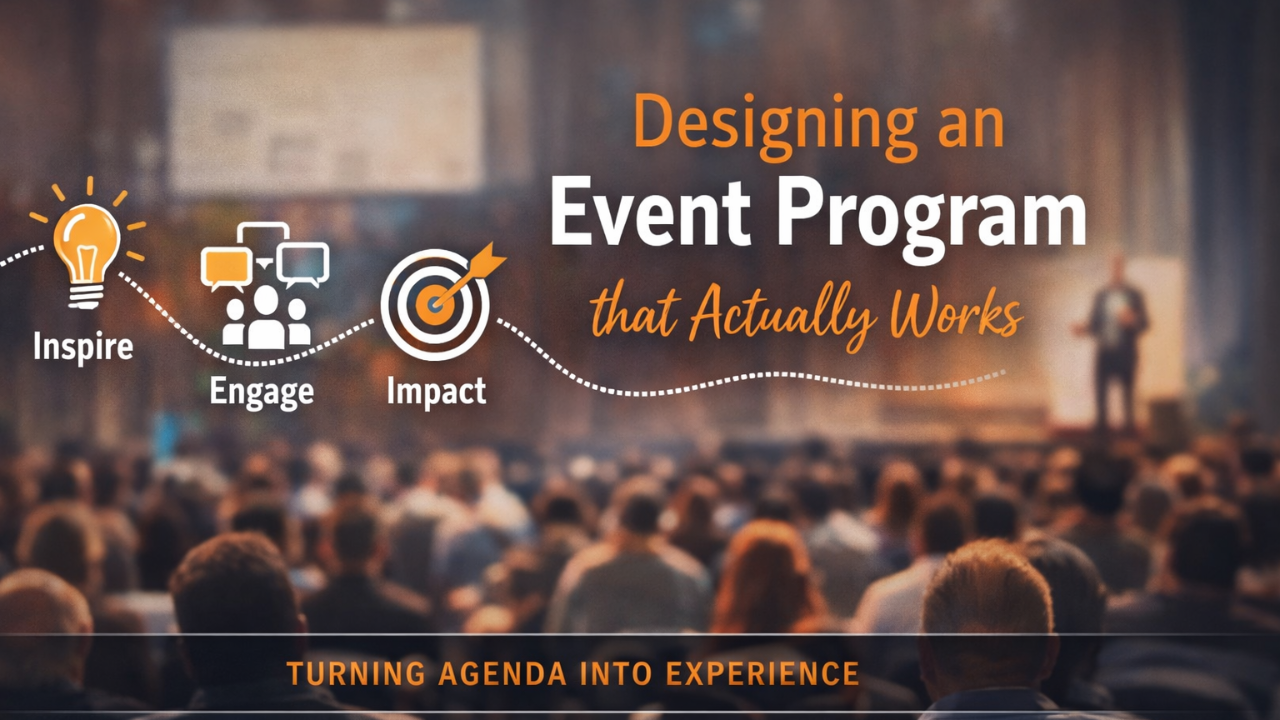
One of the questions that comes up a lot inside the 8 Week Event Plan is how to design a program that keeps people engaged all day.
Not just a list of speakers.
Not a random sequence of sessions.
A program that feels intentional and keeps people leaning in.
On a recent coaching call we reviewed an event program together. What we ended up discussing is something that applies to almost every event you will ever design. Conferences, workshops, retreats, community events, it all comes back to the same principle.
Your event program should take the audience on a journey.
Start with the thinking journey
When you’re designing a program, it helps to think about the way people process information throughout the day.
In the morning people are fresh. Their brains are ready to absorb information. That makes it a good time for foundational content, big ideas, or context setting.
By the afternoon, the energy shifts. People have heard a lot already. They are starting to think about how the ideas apply to them.
This is where workshops, discussion sessions, or more interactive elements can work really well. Instead of just listening, attendees are applying what they’ve learned, talking to others and exploring the ideas more deeply.
When the program follows this natural flow, the day feels easier for the audience. They are not working against the structure of the event.
Place the big drawcards strategically
Another thing we talked about on the call was where to place the sessions people are most excited about.
If you know there is a topic everyone wants to hear about, for example AI, it can work really well as a closing session.
Why?
Because it gives people a reason to stay until the end of the day.
It also finishes the event on a high. A strong closing session leaves people energised and talking about what they just heard, which is exactly what you want when they walk out the door.
Design every session with a purpose
A good event program is not just about filling time slots.
Every session should answer a simple question.
What do I want people thinking about after this session?
Sometimes the goal is inspiration.
Sometimes it is learning a new skill.
Sometimes it is challenging the way people currently think.
When you start designing your program with that question in mind, the event becomes much more intentional. Each session builds on the one before it and the audience keeps gaining momentum as the day progresses.
Use participation to re-energise the room
One of the easiest ways to lift the energy of an event is to bring people into the conversation.
Workshops, discussions, small group exercises or collaborative activities all help shift people from passive listening to active participation.
These sessions work particularly well after breaks when people have had a chance to stretch their legs and reset.
Instead of drifting back into another lecture style session, you bring them straight into something interactive. The room wakes up again very quickly.
Don’t underestimate the role of breaks
Breaks are not just a logistical necessity. They are an important part of the event experience.
They give people time to process what they’ve just heard, connect with other attendees and continue conversations that started during the sessions.
Short breaks between sessions help maintain momentum, while a slightly longer lunch break gives people time to relax and recharge before the afternoon sessions.
Getting this balance right helps keep the energy steady throughout the day.
Choose speakers who can hold the room
Even the best designed program can fall flat if the speakers are not engaging.
It is not enough for someone to be knowledgeable about a topic. They also need to be able to communicate in a way that connects with the audience.
A strong program often includes a mix of voices. Industry experts who bring depth and credibility, and people with fresh perspectives who challenge the room and introduce new ideas.
That combination keeps the program interesting and prevents the event from feeling predictable.
The goal is a journey, not a timetable
When you start thinking about your event program as a journey rather than a timetable, everything changes.
The sessions begin to build on each other.
The audience stays engaged for longer.
And people leave the event feeling like the experience had a clear purpose.
That is when you know the program is doing its job.
The waitlist for the next round of The 8 Week Event Plan is open now. Explore the link at the top of this page.
Hey!


